


Heavy Rain, Muddy Walks and Why Proper Dog Drying Pays Off Over Time
Feb 01, 2026
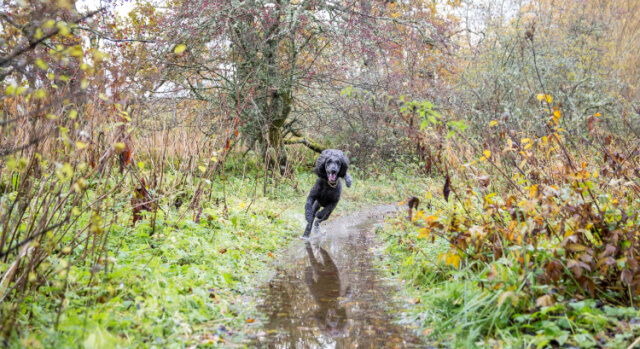
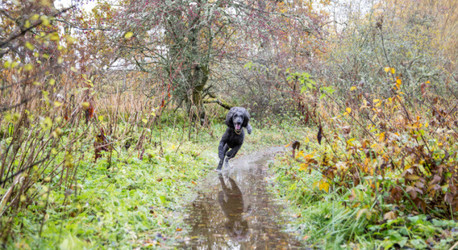
Muddy walks and wet dogs are simply part of life with our canine best friends. Whether it’s relentless rain, sideways sleet or persistent drizzle, most dogs don’t give the weather a second thought. They need their walks whatever the weather.
For some dog owners, drying off afterwards still means armfuls of soggy towels and a washing machine that never stops. For others, it’s something they solved years ago. Either way, when it's wet weather season, how you dry your dog starts to matter more than you might think. Not just for your dog’s welfare, which always comes first, but for how easily and effectively you can care for them, wet walk after wet walk.
Still using towels? Or using a drying coat?
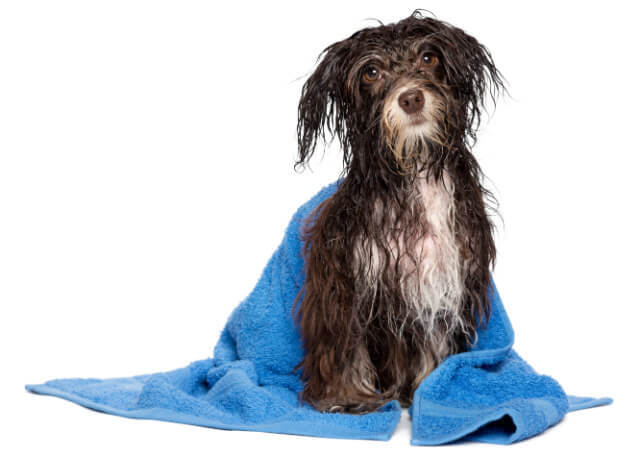
Most people start with towels simply because they already have them. Old bath towels feel like the easiest option after a wet walk, so they get pressed into service again and again.
But towel drying rarely does the job properly. After a few minutes of rubbing, most dogs lose patience and walk away.
For curly or wool coats, including Poodles and Poodle crosses, repeated towel rubbing can introduce matting, which then has to be brushed out and can be uncomfortable for the dog.
Once the towel is off, it stops absorbing moisture altogether. It doesn’t keep the dog warm while they dry naturally and it does nothing to help muscles stay warm after exercise.
Many people move on from towels for these reasons:
- Towel drying turns into a game or a battle
- Dogs only tolerate towel drying briefly, then walk away
- A towel can’t keep absorbing moisture or hold warmth once it’s off
- Laundering multiple, heavy towels becomes too much effort
Towel drying vs wearing a drying coat
There’s a fundamental difference between towel drying a dog and putting on a drying coat.
Towel drying relies on brief, hands-on effort and stops the moment the towel comes away. A drying coat, on the other hand, is designed to be worn by the dog, allowing moisture to be absorbed while they move or settle down to rest. The drying happens because the dog is wearing the solution, not because the owner is actively doing the work.
Many owners solved the towel problem years ago and haven’t looked back. But whether you’re still wrestling with towels or already using a drying coat, one thing quickly becomes clear - not all dog drying coats work equally well in real life.
Some are cheaper, some are more expensive, but price alone doesn’t determine how well a drying coat performs over time. What really makes the difference is how the solution itself is designed to work. That comes down to fabric, shape and construction.
Dogrobes unique fabric - designed for dogs not humans
Drying your dog isn’t just about removing water from their fur. It’s about what they wear to do the drying.
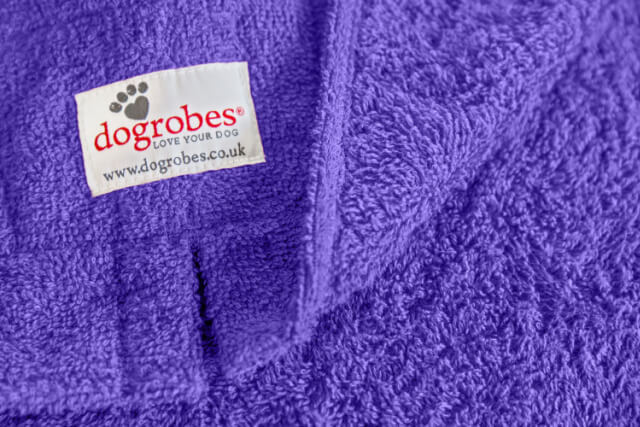
Only Dogrobes are made using dual-loop cotton towelling, developed exclusively for dogs to wear. While it may look like normal towelling, it’s very different from standard towelling used in human towels and other dog drying coats.
This diagram shows how Dogrobes' unique fabric works.
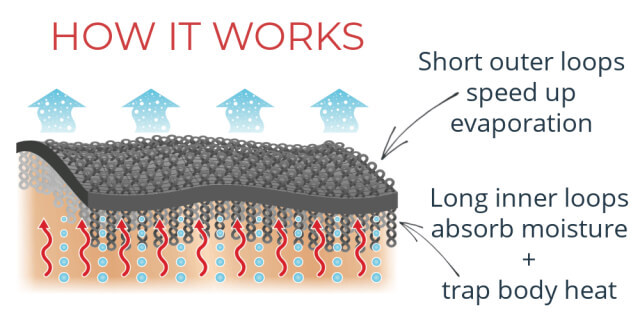
Standard towelling is designed to be used on both sides. Dogrobes’ fabric is constructed differently, with longer cotton loops on the side worn against the dog’s coat, creating a greater surface area for moisture absorption exactly where it’s needed. The loops are 100% cotton, the best natural fibre for absorbing moisture.
Because the Dogrobes fabric is lightweight and single layered, it’s easily tolerated by dogs, even those that don’t usually like wearing coats. There’s no need for it to be thick or heavy to work effectively. The weight has been carefully chosen to absorb as much moisture as possible without weighing the dog down as it dries.
Good design isn’t about adding more layers or fastenings. It’s about removing what doesn’t last and focusing on what actually works in daily use.
Buy once, buy quality - why cost per wear matters

When something is used week after week, year after year, the initial price becomes far less significant than how long it keeps doing its job.
Cost per wear isn’t just a buying decision for new customers - it’s also reassurance for those who have already invested in a Dogrobe. A product that’s still in use years later has already earned its keep.
Looking across the Original, Exclusive and MAX Dogrobe ranges, without any add-ons or customisation, the average price is around £50.
Using a realistic estimate:
2 wet walks a day for 4 months of the year
+
regular use for warmth or comfort for another month
over 4 years
= 4.6p per wear.
For dogs that wear a Dogrobe twice a day all year round - for example swimmers - the cost per wear drops even further. Used twice a day over four years, it works out at 1.7p per wear.
Many Dogrobes customers tell us the same thing: they didn’t buy another because the first one failed. They bought again because it had done its job so well for so long.
Longevity by design and why that matters to Dogrobes
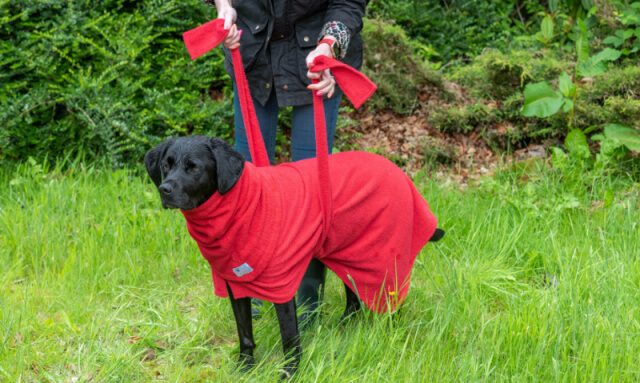
Longevity doesn’t happen by accident. It comes from design choices made right at the start.
Dogrobes are deliberately Velcro-free. Velcro fastenings can clog with hair and debris, snag on surrounding fabric and lose grip over time. Removing it removes one of the most common failure points in dog drying coats.
Dogrobes are designed with longevity in mind:
- Hard-wearing dual-loop cotton towelling
- A simple tie-belt fastening
- Reinforcement in key stress areas you don’t even see
Fewer failure points mean a much longer usable life overall.
When something lasts for years rather than seasons, it's also the more sustainable choice. Fewer replacements mean less waste and that's simply sensible design. We design longevity in and obsolescence out.
Proof from real life - used, loved and handed down
We don’t talk about longevity in theory. We see it lived out.
Customers regularly tell us about Dogrobes bought eight, ten or more years ago, still in daily use and often passed on to multiple dogs along the way.
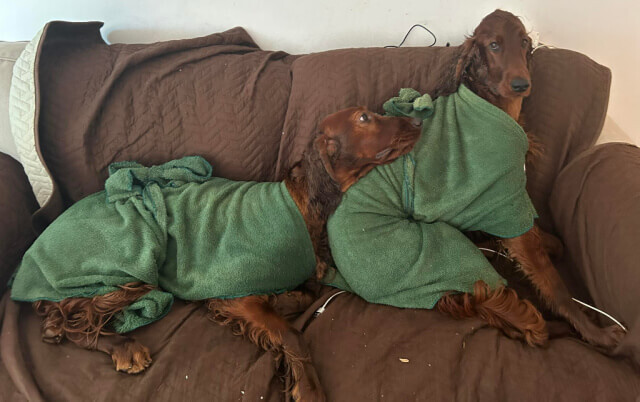
“I bought our first Dogrobes over ten years ago. All these years later, they’re still faithfully serving their fourth and fifth dogs and are as good as ever.”
“Eight years on, they’ve soaked up winter wilds, bogs, hills and rivers brilliantly. They’ve lasted so well and been used all year round.”
Others tell us they only replaced theirs after a decade - not because it stopped working, but because it felt like time for a change. And time and again, people mention why they come back:
“The tie belt is so much better than Velcro fastenings, which clog with hair and pull on fabrics, leading to fraying and thinning.”
That kind of feedback doesn’t come from short-term use. It comes from products that quietly keep doing their job year after year.
When is a Dogrobe worn out?
There’s no fixed lifespan, because usage and care vary so much. Condition matters more than age.
Over time, signs that performance may be reducing can include:
- Thinning towelling
- Flattened loops
- Reduced absorbency
Some owners are perfectly happy to keep using a Dogrobe long past the point it looks pristine. Others prefer to replace it.
Using something until it genuinely reaches the end of its useful life is one of the simplest ways to reduce waste and something we actively encourage.
Looking after your Dogrobe
A few simple habits help extend the life of any Dogrobes product:
- No need to rub down - let your dog shake then let the fabric do the work it was designed to do
- Dry your Dogrobe after each use
- Wash gently when needed
- Avoid over-drying at high temperatures
- Avoid fabric softener, which coats fibres and reduces absorbency
Top Tip: Skip the tumble dryer - Dogrobes fabric is lightweight and single-layered so it dries fast naturally
Looking after your Dogrobe properly means it keeps doing its job properly - wet walk after wet walk, swim after swim and bath after bath.
Let dogs be dogs
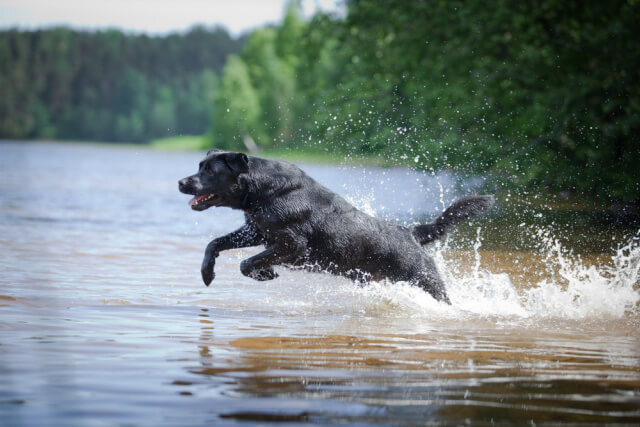
Dogs don’t stop for the weather. Mud, rain and rivers are part of their world.
Drying properly isn’t just about convenience or value. Keeping dogs warm and comfortable after wet walks helps support their wellbeing too, particularly after exercise or in colder conditions. When drying is effective and ongoing, dogs can relax and recover rather than staying cold and damp.
The right drying solution doesn’t make winter walks any less messy, it just removes the friction afterwards. Dogrobes are the easy way to dry your dog. No piles of towels. No constant replacing of cheaper alternatives (which is more expensive in the long run). Just something that works, again and again.
Dogrobes - designed for dogs who don’t stop for the weather.